
Class 11PhysicsSystem of Particles and Rotational MotionMix Example - System of Particles and Rotational Motion
MediumThe moment of inertia of a sphere of mass $M$ and radius $R$ is $I$. If the mass is kept constant,what will be the nature of the graph between $I$ and $R$?
- A
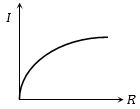
- B
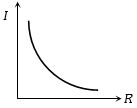
- C
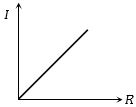
- D
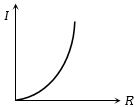
Explore More
Similar Questions
$A$ uniform sphere of mass $m$ and radius $R$ is placed on a rough horizontal surface. The sphere is struck horizontally at a height $h$ from the floor. Match the following:
$(a)$ $h = \frac{R}{2}$ $(i)$ Sphere rolls without slipping with a constant velocity and no loss of energy. $(b)$ $h = R$ $(ii)$ Sphere spins clockwise,loses energy by friction. $(c)$ $h = \frac{3R}{2}$ $(iii)$ Sphere spins anti-clockwise,loses energy by friction. $(d)$ $h = \frac{7R}{5}$ $(iv)$ Sphere has only a translational motion,loses energy by friction.
| $(a)$ $h = \frac{R}{2}$ | $(i)$ Sphere rolls without slipping with a constant velocity and no loss of energy. |
| $(b)$ $h = R$ | $(ii)$ Sphere spins clockwise,loses energy by friction. |
| $(c)$ $h = \frac{3R}{2}$ | $(iii)$ Sphere spins anti-clockwise,loses energy by friction. |
| $(d)$ $h = \frac{7R}{5}$ | $(iv)$ Sphere has only a translational motion,loses energy by friction. |
Medium
View Solution$A$ particle performs uniform circular motion with an angular momentum $L$. If the angular frequency of the particle is doubled and its kinetic energy is halved,what will be its new angular momentum?
DifficultAIEEE 2003
View SolutionConsider a disc rotating in the horizontal plane with a constant angular speed $\omega$ about its centre $O$. The disc has a shaded region on one side of the diameter and an unshaded region on the other side as shown in the figure. When the disc is in the orientation as shown,two pebbles $P$ and $Q$ are simultaneously projected at an angle towards $R$. The velocity of projection is in the $y-z$ plane and is same for both pebbles with respect to the disc. Assume that $(i)$ they land back on the disc before the disc completes $\frac{1}{8}$ rotation,$(ii)$ their range is less than half disc radius,and $(iii)$ $\omega$ remains constant throughout. Then
$A$ uniform disc is acted upon by two equal forces of magnitude $F$. One of them acts tangentially to the disc,while the other acts at the central point of the disc. The friction between the disc surface and the ground surface is $nF$. If $r$ is the radius of the disc,then the value of $n$ would be:
DifficultAIIMS 2015
View Solution$A$ metal rod of length $L$ and mass $m$ is pivoted at one end. $A$ thin disk of mass $M$ and radius $R$ $(R < L)$ is attached at its center to the free end of the rod. Consider two ways the disc is attached: (case $A$) The disc is not free to rotate about its center and (case $B$) the disc is free to rotate about its center. The rod-disc system performs $SHM$ in a vertical plane after being released from the same displaced position. Which of the following statement$(s)$ is (are) true?
Vedclass Products
For Students
Vedclass Test Series
Mock tests in real JEE/NEET style with performance analysis. 5-day free trial.
Start Free TrialFor Teachers
Exam Paper Generator
Generate Set A/B/C/D exam papers from 7.5L+ questions in 2 minutes. 3 chapters free.
Try FreeFor Institutes
Online Exam Module
Live online exams with unlimited students, 360° analytics & white-label branding.
See Demo