
Class 12PhysicsDual Nature of Radiation and matterPhotoelectric Effect by Lenard and it's Observations
Medium$A$ point source causes the photoelectric effect from a small metal plate. Which of the following curves may represent the saturation photocurrent $(I)$ as a function of the distance $(r)$ between the source and the metal?
- A
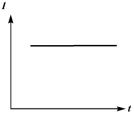
- B
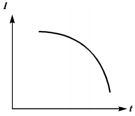
- C
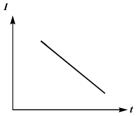
- D
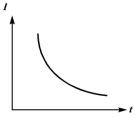
Explore More
Similar Questions
If the frequency of incident radiation is kept constant and the experiment is repeated by using incident light of different intensities,then the stopping potential $(V_{s})$
The wave picture of light has failed to explain which of the following phenomena?
Threshold frequency for a metal is $15 \times 10^{14} \, Hz$. The light of wavelength $6000 \, \text{Å}$ falls on the metal surface. Then photoelectrons [velocity of light in air, $c = 3 \times 10^8 \, m/s$]:
The minimum energy required to remove an electron from the surface of a metal is called:
Easy
View Solution$A$ monochromatic beam of light of wavelength $400\,nm$ is incident normally upon a photosensitive surface ($25\%$ reflects and the rest is absorbed). This produces a radiation pressure of $5 \times 10^{-7}\,N/m^2$ on the surface. If $0.1\%$ of the incident photons produce photoelectrons,the corresponding saturation current will be $\dots \mu A$. (Consider the area of the photosensitive surface $= 5\,cm^2$)
Difficult
View SolutionVedclass Products
For Students
Vedclass Test Series
Mock tests in real JEE/NEET style with performance analysis. 5-day free trial.
Start Free TrialFor Teachers
Exam Paper Generator
Generate Set A/B/C/D exam papers from 7.5L+ questions in 2 minutes. 3 chapters free.
Try FreeFor Institutes
Online Exam Module
Live online exams with unlimited students, 360° analytics & white-label branding.
See Demo