
In the given reaction,identify the product $[X]$:
- A
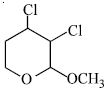
- B
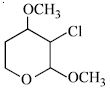
- C
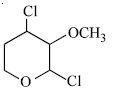
- D

Explore More
Similar Questions
The product $(B)$ of the above reaction is:
Difficult
View SolutionIn the following scheme of reaction,$X, Y$ and $Z$ respectively are:
DifficultKCET 2024
View SolutionMatch the reactions in Column-$A$ with the products in Column-$B$ and select the correct option:
Column-$A$ Column-$B$ $(1)$ $CH_3-CH_2-Cl + KOH_{(aq)} \rightarrow$ $(A)$ $1,2-\text{dichloroethane}$ $(2)$ $CH_3-CH_2-CH_2-CH_3 \xrightarrow{AlCl_3/HCl}$ $(B)$ $\text{Chloromethane}$ $(3)$ $CH_3-CH_2-Br + \text{alc. } KOH \rightarrow$ $(C)$ $\text{But-2-ene}$ $(4)$ $CH_2=CH_2 + Cl_2 \rightarrow$ $(D)$ $\text{Ethanol}$ $(E)$ $\text{Chloroethane}$ $(F)$ $\text{Ethene}$ $(G)$ $\text{Isobutane}$
| Column-$A$ | Column-$B$ |
|---|---|
| $(1)$ $CH_3-CH_2-Cl + KOH_{(aq)} \rightarrow$ | $(A)$ $1,2-\text{dichloroethane}$ |
| $(2)$ $CH_3-CH_2-CH_2-CH_3 \xrightarrow{AlCl_3/HCl}$ | $(B)$ $\text{Chloromethane}$ |
| $(3)$ $CH_3-CH_2-Br + \text{alc. } KOH \rightarrow$ | $(C)$ $\text{But-2-ene}$ |
| $(4)$ $CH_2=CH_2 + Cl_2 \rightarrow$ | $(D)$ $\text{Ethanol}$ |
| $(E)$ $\text{Chloroethane}$ | |
| $(F)$ $\text{Ethene}$ | |
| $(G)$ $\text{Isobutane}$ |
Difficult
View SolutionIdentify the correct order of reactivity for the following pairs towards the respective mechanism:
$(A)$ $S_{N}2$: Isobutyl bromide > tert-Butyl bromide
$(B)$ $S_{N}1$: Benzyl bromide > $2-$Phenylethyl bromide
$(C)$ Electrophilic substitution: Chlorobenzene > $1-$Chloro$-4-$nitrobenzene
$(D)$ Nucleophilic substitution: Bromobenzene < $1-$Bromo$-4-$nitrobenzene
Choose the correct answer from the options given below:
$(A)$ $S_{N}2$: Isobutyl bromide > tert-Butyl bromide
$(B)$ $S_{N}1$: Benzyl bromide > $2-$Phenylethyl bromide
$(C)$ Electrophilic substitution: Chlorobenzene > $1-$Chloro$-4-$nitrobenzene
$(D)$ Nucleophilic substitution: Bromobenzene < $1-$Bromo$-4-$nitrobenzene
Choose the correct answer from the options given below:
DifficultJEE MAIN 2023
View SolutionMatch the List-$I$ with List-$II$:
List-$I$ List-$II$ $A$. Finkelstein reaction $I$. $SbF_3$ $B$. Swarts reaction $II$. $Na$, dry ether $C$. Sandmeyer's reaction $III$. $NaI$ $D$. Fittig reaction $IV$. $Cu_2Cl_2$
Choose the correct answer from the options given below:
| List-$I$ | List-$II$ |
| $A$. Finkelstein reaction | $I$. $SbF_3$ |
| $B$. Swarts reaction | $II$. $Na$, dry ether |
| $C$. Sandmeyer's reaction | $III$. $NaI$ |
| $D$. Fittig reaction | $IV$. $Cu_2Cl_2$ |
Choose the correct answer from the options given below:
Vedclass Products
For Students
Vedclass Test Series
Mock tests in real JEE/NEET style with performance analysis. 5-day free trial.
Start Free TrialFor Teachers
Exam Paper Generator
Generate Set A/B/C/D exam papers from 7.5L+ questions in 2 minutes. 3 chapters free.
Try FreeFor Institutes
Online Exam Module
Live online exams with unlimited students, 360° analytics & white-label branding.
See Demo