
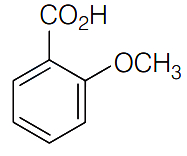
The major product in the following reaction is:
- A
- B
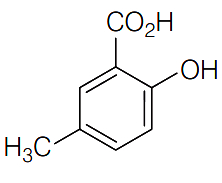
- C
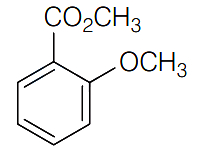
- D
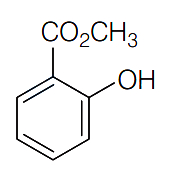
Explore More
Similar Questions
Consider the following gaseous equilibrium in a closed container of volume $V$ at $T \text{ K}$:
$P_{2(g)} + Q_{2(g)} \rightleftharpoons 2PQ_{(g)}$.
$2 \text{ moles}$ each of $P_{2(g)}$, $Q_{2(g)}$, and $PQ_{(g)}$ are present at equilibrium. Now, $1 \text{ mole}$ each of $P_{2}$ and $Q_{2}$ are added to the equilibrium while keeping the temperature at $T \text{ K}$. The number of moles of $P_{2}$, $Q_{2}$, and $PQ$ at the new equilibrium, respectively, are:
$P_{2(g)} + Q_{2(g)} \rightleftharpoons 2PQ_{(g)}$.
$2 \text{ moles}$ each of $P_{2(g)}$, $Q_{2(g)}$, and $PQ_{(g)}$ are present at equilibrium. Now, $1 \text{ mole}$ each of $P_{2}$ and $Q_{2}$ are added to the equilibrium while keeping the temperature at $T \text{ K}$. The number of moles of $P_{2}$, $Q_{2}$, and $PQ$ at the new equilibrium, respectively, are:
$A$ light string passing over a smooth light pulley connects two blocks of masses $m_1$ and $m_2$ (vertically). If the acceleration of the system is $\frac{g}{8}$,then the ratio of masses $m_2 : m_1$ is:
$A$ big liquid drop splits into $n$ similar small drops under isothermal conditions. Then, in this process:
The smallest unit of life is...
$\cos ^{-1}\left(\frac{-1}{2}\right)-2 \sin ^{-1}\left(\frac{1}{2}\right)+3 \cos ^{-1}\left(\frac{-1}{\sqrt{2}}\right)-4 \tan ^{-1}(-1)$ equals:
Vedclass Products
For Students
Vedclass Test Series
Mock tests in real JEE/NEET style with performance analysis. 5-day free trial.
Start Free TrialFor Teachers
Exam Paper Generator
Generate Set A/B/C/D exam papers from 7.5L+ questions in 2 minutes. 3 chapters free.
Try FreeFor Institutes
Online Exam Module
Live online exams with unlimited students, 360° analytics & white-label branding.
See Demo