
Class 11PhysicsWork, Energy, Power and CollisionWork Done by Variable Force and Force-Displacement Graph
MediumThe potential energy $U(x)$ of a system is represented in the figure. The force $F(x)$ acting on the system will be represented by:
- A
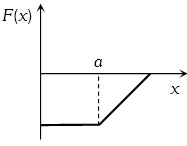
- B
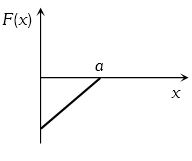
- C
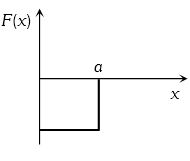
- D
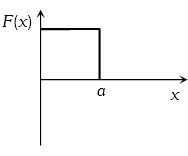
Explore More
Similar Questions
For a particle moving under the action of a variable force,the kinetic energy-position $(K-x)$ graph is given. Then:
Medium
View SolutionThe components of a force acting on a particle vary according to the graphs shown. To reach point $B\, (8, 20, 0)$ from point $A\, (0, 5, 12)$,the particle moves on paths parallel to the $x$-axis,then the $y$-axis,and then the $z$-axis. The work done by this force is ............ $J$.
Medium
View SolutionThe value of the force constant for the given force-displacement graph is:
Medium
View SolutionThe graphs below show the magnitude of the force on a particle as the particle moves along the positive $x$ axis from the origin to $x = x_1$. The force is parallel to the $x$ axis and is conservative. The maximum magnitude $F_1$ has the same value for all graphs. Rank the situations according to the change in the potential energy associated with the force,from least (or most negative) to greatest (or most positive).
Difficult
View Solution$A$ force $F$ acting on an object varies with distance $x$ as shown in the graph. The force is in $N$ and $x$ is in $m$. The work done by the force in moving the object from $x = 0$ to $x = 6$ is ............. $J$.
Easy
View SolutionVedclass Products
For Students
Vedclass Test Series
Mock tests in real JEE/NEET style with performance analysis. 5-day free trial.
Start Free TrialFor Teachers
Exam Paper Generator
Generate Set A/B/C/D exam papers from 7.5L+ questions in 2 minutes. 3 chapters free.
Try FreeFor Institutes
Online Exam Module
Live online exams with unlimited students, 360° analytics & white-label branding.
See Demo